Disaster Preparedness
Chaplain Kelly Hansen
KO Conference Disaster Response Coordinator
March 2-6 was Severe Weather Preparedness week. Like most of you—that week came and went without much attention on my end—my workplace sent updates and I read them with interest, as a Conference Disaster Response Coordinator. Yet I didn’t actually DO anything in response to the suggestions or information. I didn’t update my Emergency Supplies tub which is years old, or update important paperwork like my new will and Medical Durable Power of Attorney that I completed last fall. All things that really are important in being proactively ready for a disaster. When did you last update this information for your household or your church? I encourage you to join me in committing to make this a priority as severe weather events will continue to be on the rise due to Climate Change.
Earlier this week I heard an article on NPR about the report issued by the FEMA Review Council that President Trump had established. Early in his presidency, President Trump had suggested FEMA should be completely dismantled. Thankfully this report did not make that suggestion however it did suggest significant cuts to the program which could have potential impact in our conference area since we have a significant likelihood of future events. As the commenter reminded me, we’ve had significant storms in the month of April already, yet May and June are more likely to be the active months for severe weather.
All the more reason for all of us regardless of context--our churches, businesses, or personal households, to have a plan in place in case of emergency. Essentials include documenting what services would need to be shut off—gas, electric, water, etc and who are the contact people or numbers for those services? Who are our service providers for insurance or medical providers? What are their names and contact information. Who all needs to have this information-Church Council, staff members, family members, etc. How will we check in on our members, staff members, family members, and friends? Do we have an updated and accurate list of all the people we would need to check on? Don’t forget you don’t have to start from scratch-our National Disaster Recovery Minister Katie Howe has extensive resources to help you create a Disaster Response Plan for your church.
Just a couple of weeks ago we had a tornado touch down about 8 miles away from my apartment. My spouse and dogs were ready to go to our shelter in place area if needed—the clubhouse of our complex, while I was out of town experiencing a significant snowfall in Montana while visiting family. These events reminded me how essential it is for me to get prepared—these events are not something that “happens to someone else”, they can and do happen right in our own communities. Being prepared can help the recovery process. Yet remember that you have great support from your conference and national office if disaster does strike—there are emotional and spiritual support teams that can deploy to support you personally and professionally—remember you could be experiencing the same disaster as your community. There are teams of people in place to offer physical support like cleanup, and tangible support like food and water, and financial support through grants to help the rebuilding process. Building relationships with organizations that support disaster recovery during “blue skies”—when things are going well, is a helpful way to know who to connect with during emergencies. You can find information online by searching COAD: Community Organizations Active in Disaster or VOAD: Voluntary Organizations Active in Disaster. You may even have folks in your church who want to participate in those programs or be part of your disaster response planning and recovery team.
Here’s some helpful information that this year’s Severe Weather Preparedness week shared: “Storm Ready - Have a Plan" means to be prepared for severe weather by creating a detailed emergency plan that outlines actions to take before, during, and after a storm, including where to seek shelter, communication methods, and necessary supplies to have on hand; essentially, actively preparing for potential hazardous weather situations through a well-defined strategy.
Proactive approach:
The phrase emphasizes taking action beforehand to be prepared, not just reacting when a storm is imminent.
Components of a plan:
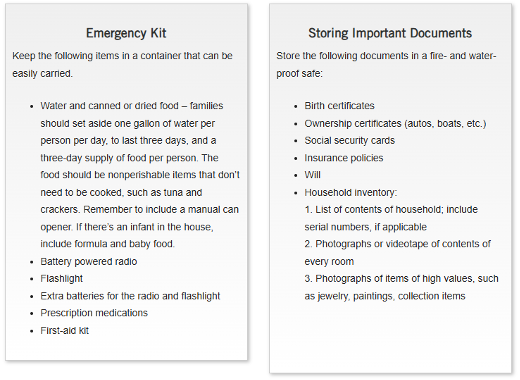
· Emergency kit: Having essential supplies like food, water, first aid supplies, batteries, and a weather radio.
· Designated shelter areas: Knowing where to go in your home or community for safety during a storm.
· Communication methods: Identifying how you will contact family members and authorities during an emergency.
· Weather monitoring: Staying updated on weather forecasts and warnings through multiple sources.
Here are some links to great resources.
https://www.ucc.org/what-we-do/wider-church-ministries/global-hope/disaster/
https://www.kansascityregionalcoad.org/
https://oklahoma.gov/oem/readyok/be-prepared/twelveways/get-involved-in-community.html